


Resilience Coaching for Professionals

Resilience coaching helps professionals develop the internal capacity to remain clear, connected, and adaptable during demanding situations.

Building Capacity for the Moments That Matter Most

Back-to-back meetings run into one another. Priorities change before the last plan has had time to settle. A difficult conversation stays with you long after the workday ends.

For many professionals, pressure is no longer an occasional disruption. It has become part of the environment.

You may still be performing well. You may be supporting a team, making important decisions, and meeting expectations. But you notice that recovery takes longer. Your patience is less consistent. Situations you would normally handle thoughtfully begin to require more effort.

This does not mean you are insufficiently resilient. It may just mean your nervous system is being asked to carry more than its current capacity can comfortably hold.

Resilience coaching helps professionals develop the internal capacity to remain clear, connected, and adaptable during demanding situations. Rather than teaching people to become tougher or tolerate increasing levels of stress, it focuses on the regulation skills that allow leadership, communication, and sound decision-making to remain available when pressure is highest.

The goal is not simply to bounce back after something difficult happens. It is to build the capacity to stay present while it is happening.

Resilience Is More Than Bouncing Back

Resilience is often described as the ability to recover quickly from adversity. This definition is useful, but incomplete.

It assumes that pressure eventually ends and that people have enough time and space to return to a comfortable baseline. In many workplaces, those conditions do not exist. Organizational change overlaps with demanding deadlines. One difficult decision is followed by another. Leaders are expected to support others while managing their own uncertainty.

In that environment, resilience cannot only mean recovering afterward. 

It also means remaining flexible while conditions are changing.

It means staying curious during disagreement instead of becoming defensive. It means receiving an unexpected question without losing access to your thinking. It means recovering from a difficult interaction without allowing it to shape the rest of the day.

This is the distinction at the center of capacity-based resilience development. The shift is not from weakness to toughness, but from enduring pressure to having more choice in how you respond to it.

Why Resilience Begins in the Nervous System

To understand resilience, it helps to understand what happens biologically under stress.

The autonomic nervous system, the body’s built-in system for responding to safety and stress, is constantly assessing the environment. When it detects pressure, uncertainty, or potential threat, it prepares the body to protect itself.

As that response intensifies, the prefrontal cortex, the part of the brain responsible for planning, empathy, communication, and thoughtful decision-making, can become less available. This is why capable professionals sometimes feel unlike themselves under pressure.

A leader who values collaboration may become controlling. A manager who normally communicates with care may become abrupt. An executive who is skilled at strategic thinking may struggle to see beyond the most immediate problem.

Stress does not erase those capabilities. It temporarily limits access to them. This is not a character flaw or a failure of mental strength. It is biology responding as it was designed to respond.

Mental resilience coaching becomes more effective when it begins with this understanding. Instead of asking people to think more positively or push themselves harder, it helps them recognize their stress response and develop the capacity to remain engaged without being overtaken by it.

And, once the biology is understood, the focus can shift to how resilience changes everyday work.

What Workplace Resilience Looks Like

Workplace resilience is not an abstract personality trait. It is visible in the way people communicate, decide, recover, and relate to others under pressure.

It looks like receiving challenging feedback without immediately defending yourself.

It means staying present during a performance conversation instead of rushing through it to reduce your own discomfort.

It shows up when a leader can communicate honestly during uncertainty without pretending to have answers that do not yet exist.

It also includes knowing when the demand itself needs to change.

Resilience is not agreeing to every request. It may mean renegotiating priorities, protecting time for deeper work, asking for support, or recognizing that the current pace is not sustainable. A resilient professional is not someone who remains calm at all times. They are someone who can notice when stress is beginning to shape their behavior and create enough space to choose what happens next.

That capacity supports:

These outcomes are why resilience coaching matters. The goal is not resilience for its own sake. It is what greater capacity makes possible in leadership, collaboration, performance, and wellbeing.

How Resilience Coaching Builds Capacity

Traditional resilience training often introduces useful ideas, techniques, and shared language. But understanding resilience intellectually is different from accessing it under real pressure. 

At Glial, resilience coaching focuses on application. The work begins by helping professionals recognize how their own stress response develops. Some people first notice physical tension or shallow breathing. Others notice impatience, overthinking, withdrawal, or a growing need to control the situation.

These signals often appear before someone consciously realizes they are overwhelmed. Learning to recognize them earlier creates a point of choice.

From there, professionals can practice small forms of regulation within the situations that already make up their workday. That may include pausing before answering a difficult question, grounding attention before a high-stakes meeting, or creating a brief transition between demanding conversations.

Reflection is equally important.

After a difficult interaction, the question is not simply, “What did I do wrong?”

More useful questions might be:

What was happening just before I became reactive?

What did I notice in my body?

What helped me stay connected?

Where did I lose access to the response I intended?

This approach removes blame while still creating responsibility. It helps professionals learn from their nervous system instead of treating it as something they should be able to override. Over time, these repeated moments of awareness, regulation, and reflection support a more flexible response to pressure.

This is how resilience becomes a practiced capacity rather than an idea someone understands only when conditions are calm.

Resilience in Real Leadership Situations

The value of leadership resilience becomes clearest in the moments when other people are looking to the leader for direction, steadiness, or perspective.

Leading through uncertainty

During organizational change, leaders are often asked to communicate before every answer is available.

Without sufficient capacity, uncertainty can lead to avoidance, excessive reassurance, or controlling behavior. A more regulated leader can acknowledge what is unknown while still providing clarity about what happens next.

That steadiness supports trust because people do not need certainty as much as they need honest, consistent communication.

Navigating disagreement

Conflict places an immediate demand on the nervous system.

A leader may begin preparing a defense before the other person has finished speaking. They may interpret a challenge as disrespect or move too quickly toward a solution simply to end the discomfort.

Resilience creates enough space to remain curious.

The leader can listen, ask a clarifying question, and separate the content of the disagreement from the stress response surrounding it.

Making complex decisions

Senior leaders regularly make decisions involving incomplete information, competing interests, and meaningful consequences.

Executive resilience coaching helps leaders notice when urgency is narrowing their thinking. It supports the ability to slow the process enough to distinguish what requires immediate action from what requires greater perspective.

This does not make decisions easy. It makes thoughtful decision-making more accessible.

Supporting a team under pressure

Stress does not remain contained within one person. Leaders influence the emotional and physiological tone around them.

A leader who becomes visibly frantic may unintentionally signal that the situation is unmanageable. A leader who remains present and responsive can help others regain access to their own thinking.

This is co-regulation, the way one person’s steadiness can support greater stability in another. It does not require leaders to suppress their emotions or perform calmness. It asks them to develop enough internal capacity that their stress does not have to run the room.


Resilience Does Not Mean Accepting Unhealthy Conditions

Resilience is sometimes presented as the ability to endure whatever an organization demands. That framing places the full burden of adaptation on the individual. It can also allow unrealistic workloads, unclear priorities, and unhealthy norms to remain unexamined.

Glial takes a different view.

Individual regulation matters, but it cannot compensate indefinitely for a system that repeatedly overwhelms the people inside it. Some workplace pressure can be met through stronger self-awareness, recovery, and emotional regulation. Other pressure requires structural change.

This may involve clarifying responsibilities, reducing unnecessary meetings, adjusting workloads, improving decision processes, or creating healthier expectations around availability.

Lasting workplace resilience depends on both.

People need the internal capacity to navigate reasonable pressure. Organizations need to create conditions that do not keep people in a continuous state of protection. Resilience should help people engage more fully with meaningful work. It should never become a reason to tolerate what is unsustainable.

Leadership coaching becomes more useful when a leader can remain present long enough to apply what they have learned.

Communication skills become more reliable when defensiveness is not controlling the conversation.

Emotional intelligence becomes easier to access when the nervous system has enough capacity for empathy, perspective, and curiosity.

Stress management becomes more sustainable when it addresses the body’s response to pressure rather than relying only on time-management techniques.

Regulation-first does not mean regulation-only.

The work still includes communication, boundaries, decision-making, conflict, and organizational systems. The difference is sequencing: build the conditions for access, then develop and apply the skills.

Regulation Is the Foundation Beneath Every Other Skill

Communication training matters.

Leadership development matters.

Emotional intelligence matters.

Stress management and business strategy matter.

But each of these becomes more difficult to use when the nervous system is overloaded.

That is why Glial Solutions begins with regulation.

A regulation-first approach works beneath behavior and mindset to strengthen the internal conditions that allow other skills to remain accessible. It does not replace established leadership tools. It helps those tools hold when the pressure is real.

This makes resilience more than one coaching topic among many. It is the foundation supporting them.


Over time, professionals become more familiar with their own stress patterns and more confident in their ability to respond. The nervous system still reacts, but that reaction becomes a signal rather than an instruction.

Glial’s coaching is designed to support this kind of development. We combine applied neuroscience, somatic awareness, and real-world leadership practice to build capacity across self-regulation, co-regulation, and team stability under pressure.

The aim is not to give leaders another model to remember. It is to help them remain able to use what they already know when circumstances become difficult.

Building Resilience Through Consistent Practice

Resilience rarely develops through one insight, one workshop, or one particularly restful weekend. It develops through repeated practice in the context of real work.

That practice may seem simple and small.

A leader notices tension earlier during a meeting.

A manager pauses before responding to an unexpected message.

A team develops shared language for recognizing when pressure is narrowing the conversation.

A senior professional recovers from a setback without carrying it into every interaction that follows.

These small changes accumulate.

A More Sustainable Definition of Resilience

Pressure is part of meaningful work. Resilience does not require pretending otherwise. It is not the ability to absorb endless demand, remain positive through every setback, or return immediately to productivity after something difficult. It is the capacity to stay connected to yourself, to other people, and to the responsibility in front of you while conditions are changing.

One place to begin is by noticing what happens in the first few moments of pressure.

Before your next difficult conversation, pause.

Notice your breathing, your posture, and where you are holding tension.

Notice whether your attention has narrowed or whether you are already preparing your response.

Then allow one slower breath before you continue.

That pause will not remove the pressure.

But it may create enough space for curiosity, perspective, and choice to return.

Over time, resilience develops through moments like these, not by becoming tougher, but by becoming more capable of staying present when the pressure is real.

Reclaim Your Time

If you’re ready to cut through the noise and build an AI strategy that actually works — one that respects your time, your legal standards, your values, and the people you serve — we’re here to help.

Let’s partner. Let’s make your firm more focused, more sustainable, and more capable of expanding the work that matters.

Book your AI Roadmap call today

The foundation beneath leadership, communication, and culture

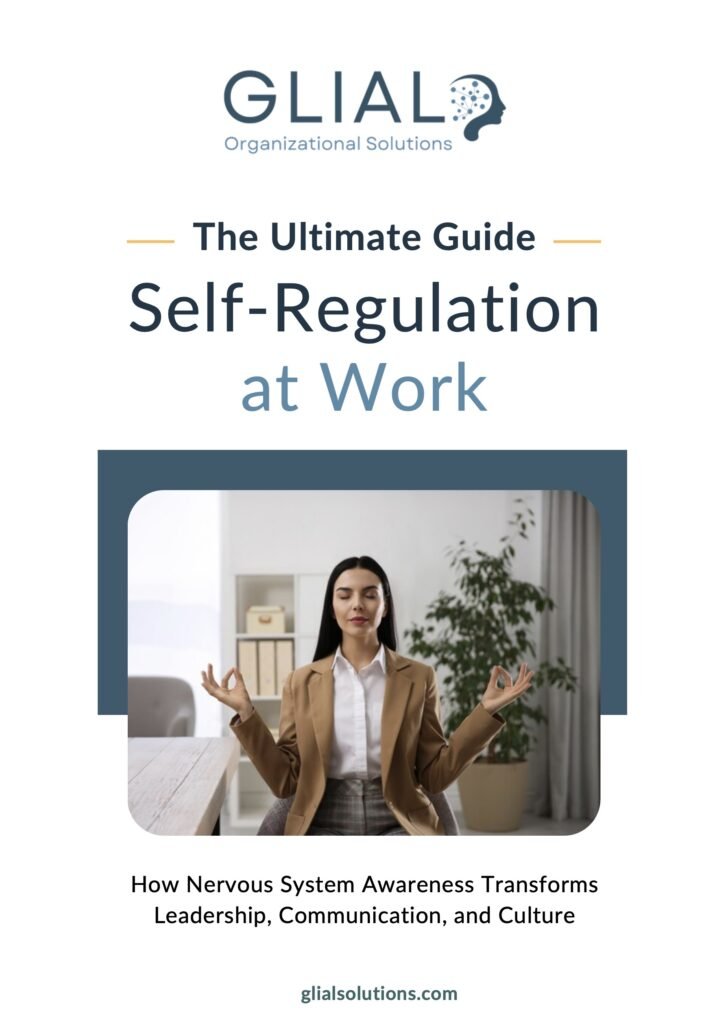
Download The Ultimate Guide to Self-Regulation at Work