



Stress Management Coaching for Professionals

You may still be performing well, sometimes exceptionally well. But recovery takes longer. Patience runs shorter. Decisions that once felt straightforward now carry a level of pressure that never fully settles.

Managing Workplace Stress Before It Becomes Burnout

You finish the day, but your mind keeps working.

You replay a conversation you wish you had handled differently. You check one more email before bed. You wake in the middle of the night already thinking about tomorrow’s priorities.

You may still be performing well, sometimes exceptionally well. But recovery takes longer. Patience runs shorter. Decisions that once felt straightforward now carry a level of pressure that never fully settles.

These experiences do not mean you are failing or that you are not resilient enough. They may be signs that the demands placed on your nervous system are beginning to exceed its current capacity.

Stress management coaching helps professionals recognize those patterns early and develop practical ways to manage pressure before it begins affecting their health, communication, and performance. Rather than asking people to simply relax, push through, or adopt better habits, coaching focuses on helping them remain clear, connected, and effective during the real situations that create workplace stress.

The goal is not to eliminate pressure from meaningful work. It is to increase your capacity to meet that pressure without losing access to the skills you already have.

Why Managing Workplace Stress Is About Capacity, Not Toughness

Many workplace cultures still treat stress as a test of endurance. Strong leaders are expected to keep going, stay available, and absorb increasing levels of pressure without showing the impact. But workplace stress is not simply a matter of willpower.

The autonomic nervous system, the body’s built-in system for responding to safety and stress, is constantly assessing what is happening around us. When it detects sustained pressure or uncertainty, it shifts attention toward protection.

At the same time, the prefrontal cortex, the part of the brain responsible for planning, empathy, communication, and thoughtful decision-making, can become less available.

Stress does not erase leadership skills. Stress temporarily limits access to them.

That is why a capable manager may become more reactive during a difficult conversation. An experienced executive may struggle to weigh options clearly when too many decisions arrive at once. A thoughtful founder may become controlling when uncertainty continues for too long.

These are not character flaws. They are normal biological responses to sustained demand.

Effective workplace stress coaching begins with this reframe. Instead of asking why someone cannot simply handle more, it asks what would help their nervous system remain more responsive and flexible under pressure.

How Chronic Workplace Stress Affects Leadership and Performance

Workplace stress rarely appears all at once. More often than not, it builds gradually through full calendars, competing priorities, difficult decisions, organizational uncertainty, and the expectation of constant availability.

At first, the changes may seem small.

Communication becomes shorter.

Patience decreases during one-on-one conversations.

Important discussions are postponed because they feel like one demand too many.

Meetings become more difficult to follow, and the space between them is filled with messages, notifications, and unfinished decisions.

Over time, these patterns begin affecting performance.

A leader facing decision overload may default to the fastest answer rather than the most thoughtful one. A manager with little capacity left may interpret a reasonable question as resistance. An executive who feels constantly behind may communicate with urgency even when urgency is not necessary.

Stress also changes how people relate to one another.

Curiosity declines.

Defensiveness increases.

Minor disagreements escalate more quickly because everyone is already closer to their threshold.

Teams may become less willing to ask questions or raise concerns because they sense that their leader has little capacity left to receive them.

This is why managing workplace stress is not only a personal wellbeing issue. It influences communication, trust, collaboration, decision-making, and the overall experience of working together. And it is more productive to address these patterns before they develop into burnout, prolonged disengagement, or more significant health concerns.

What Stress Management Coaching Looks Like

Stress management coaching is a focused, practical process for understanding how stress shows up in your work, and it teaches you how to develop ways to respond differently.

It is not about creating a life without stress. It is not a collection of generic relaxation techniques. And it is not another expectation to manage perfectly.

Stress management coaching usually begins by identifying the situations that place the greatest demand on your nervous system.

These demands might include:

From there, coaching helps you recognize how stress first appears. For one leader, stress may begin with physical tension or shallow breathing. For another, it may look like impatience, overexplaining, difficulty concentrating, or an immediate desire to take control.

Recognizing those early signals creates a point of choice. Instead of noticing stress only after a difficult interaction or an exhausting day, you can begin responding while the pattern is still unfolding.

That is one of the central aims of stress reduction coaching: not simply reducing the amount of stress in your life, but changing how quickly you recognize it, how effectively you respond to it, and how fully you allow yourself to recover from it.

Practical Regulation Skills for the Workday

The most useful stress management practices are the ones you can apply during real work situations.

A long meditation practice may be valuable, but it may not help in the middle of a tense meeting or immediately before a difficult conversation. Coaching therefore focuses on small, repeatable actions that support regulation without requiring you to step away from your responsibilities.

This might include slowing your exhale before responding to an unexpected question.

It could mean placing both feet on the floor and noticing physical support during a high-pressure call.

It may involve taking two quiet minutes between meetings instead of immediately opening email.

For some leaders, regulation means briefly stepping outside or standing during a phone call. For others, it involves preparing for a difficult conversation in a way that addresses both the message and the physical stress response.

These practices work because they give the nervous system information that the present moment is manageable. This practice can create enough internal space to listen more carefully, think more clearly, and choose a response rather than react automatically.

The practice itself may seem simple and small. Its effect on communication and decision-making can be significant.

Stress Management in Real Leadership Situations

The value of stress management for leaders becomes clearest when it is applied to situations they already face.

Decision overload

An executive managing multiple priorities may feel that every decision carries the same level of urgency.

Coaching can help separate decisions that require deep thought from those that can be delegated, delayed, or simplified. It can also help create protected periods for complex thinking rather than trying to make important choices between meetings and messages.

This type of coaching does more than improve a calendar. It protects the cognitive capacity needed for judgment, perspective, and strategic thinking.

Difficult conversations

Performance reviews, role changes, and conflict often create stress before the conversation even begins.

Coaching can help leaders notice anticipatory stress, prepare their message, and establish a regulation practice they can use before and during the discussion.

The aim is not to remove emotion. It is to remain present enough to communicate clearly, listen openly, and respond to what is actually happening rather than to what the nervous system expects might happen.

Organizational uncertainty

During periods of change, leaders are often expected to provide steadiness even when they do not yet have complete answers.

Executive stress management can help leaders tolerate that uncertainty without becoming overly controlling, avoidant, or prematurely reassuring.

Greater regulation allows a leader to say, “Here is what we know, here is what we do not know, and here is what happens next,” without allowing their own discomfort to shape the message.

Founder and senior-leader overwhelm

For founders and senior leaders, stress often comes from carrying too many decisions, relationships, and risks at once.

Coaching may address boundaries, delegation, escalation protocols, recovery, and the belief that leadership requires constant availability.

The goal is not to reduce commitment. It is to make that commitment more sustainable.

Building Stress Resilience Without Normalizing Overload

The word resilience is sometimes used to suggest that people should become better at tolerating unhealthy conditions. That is not Glial’s approach.

Stress resilience coaching should not teach professionals to endure unlimited pressure. It should help them remain responsive under reasonable demand while also recognizing when workloads, expectations, or organizational systems need to change. This distinction matters.

Some stress can be addressed through greater self-awareness and regulation. Other stress is created by unclear priorities, unrealistic workloads, constant interruption, or a lack of organizational support. Coaching should help leaders understand both.

A regulation-first approach can strengthen the internal capacity to navigate pressure. It can also make it easier to recognize when a structural change is needed. This may mean reducing unnecessary meetings, clarifying decision rights, resetting expectations, delegating more effectively, or protecting recovery time.

Personal regulation and organizational responsibility are not competing ideas. Both are necessary for sustainable performance.

Glial’s Regulation-First Approach

At Glial Solutions, stress management begins with the understanding that many workplace challenges are capacity challenges.

Leadership development matters.

Communication skills matter.

Emotional intelligence matters.

Time management and business strategy matter.

But those skills become more difficult to access when the nervous system is persistently overloaded.

Regulation creates the internal conditions that allow existing skills to remain available.

That is why Glial’s approach is regulation-first, not regulation-only.

Coaching may begin by helping a leader recognize stress earlier, recover more effectively, and remain present during difficult situations. From there, the work can extend into communication, delegation, boundaries, conflict, and decision-making.

The aim is not to add another framework for leaders to remember. It is to build the capacity that allows thoughtful leadership to remain accessible when pressure is highest.

Building Long-Term Capacity

There is a difference between temporary stress relief and lasting capacity.

A weekend away may offer needed recovery. A breathing exercise may help in a difficult moment. Both can be useful.

But long-term change develops through consistent practice and thoughtful adjustments to how work is structured.

Over time, coaching may help a leader:

These shifts are often quiet.

A leader notices that a tense meeting no longer affects the rest of the day.

A manager pauses before responding defensively.

An executive ends the evening without continuing to replay every unresolved decision.

Those moments may not look dramatic from the outside, but they represent meaningful changes in how stress is experienced and managed.

For leaders who want more individualized support, Glial’s One-on-One Leadership Coaching creates space to build this capacity in the context of their actual work, responsibilities, and relationships.

The focus is not on becoming someone different. It is on becoming more consistently able to access the leader you already are.

You Cannot Eliminate Stress, but You Can Change How You Meet It

Stress is part of meaningful work. The goal is not to remove every demand, avoid difficult conversations, or remain calm at all times. The goal is to develop enough capacity to stay connected to yourself, to other people, and to the work in front of you, even when pressure is present.

One place to begin is by noticing the first sign that stress is rising.

Before your next difficult meeting or high-stakes conversation, pause briefly.

Notice your breathing.

Notice where your body is holding tension.

Notice whether your attention has narrowed.

Then take one slower breath before you continue.

That pause will not solve every workplace challenge.

But it can create enough space to respond with greater clarity and intention.

Over time, those small moments become part of a larger shift: from being carried by the stress response to meeting workplace pressure with more awareness, flexibility, and choice.

Reclaim Your Time

If you’re ready to cut through the noise and build an AI strategy that actually works — one that respects your time, your legal standards, your values, and the people you serve — we’re here to help.

Let’s partner. Let’s make your firm more focused, more sustainable, and more capable of expanding the work that matters.

Book your AI Roadmap call today

The foundation beneath leadership, communication, and culture

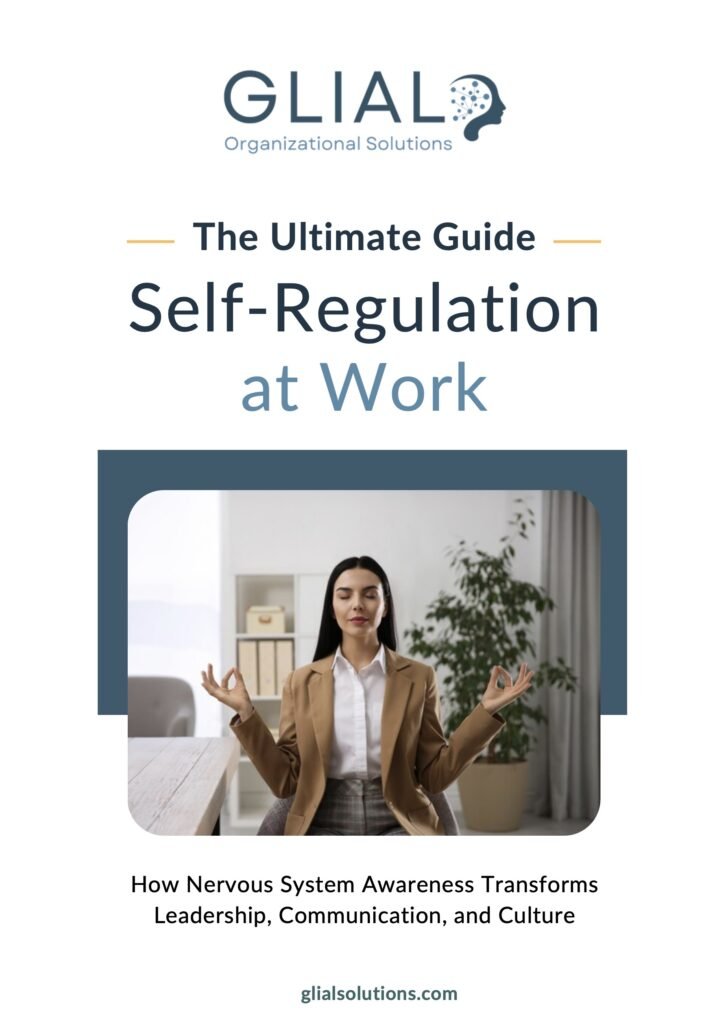
Download The Ultimate Guide to Self-Regulation at Work